
Menu

Te Rourou Tātaritanga: Informatics for Social Services and Wellbeing aims to address New Zealand's critical need for better linking of data and access to datasets, leveraging administrative and other data resources to advance excellence in the use of social data.
Andrew Sporle is a co-leader on the project, alongside researchers from the University of Auckland and Victoria University of Wellington.
Funded by: Ministry of Business, Innovation and Employment Endeavour Fund
Grant number: 62506 ENDRP
Te Rourou Tātaritanga aims to improve data standards, support secure and ethical access to data, and promote Māori data sovereignty, while addressing privacy, legal, and security considerations surrounding the use of social data. By strengthening how social data is linked, accessed, and analysed, the programme will support more informed decision-making in the development of social policy.

Despite evidence that Māori experience disproportionate rates of disability, there is a lack of accurate, culturally-grounded data on the prevalence and impacts of disability on Māori. This limits understanding of how disability affects Māori health, wellbeing, social inclusion, and economic outcomes, and constrains efforts to address these inequities in policy and disability services.
Funded by: Health Research Council of New Zealand
Hosted by: University of Otago
Led by Bernadette Jones, this project used a Māori-led methodological approach to develop culturally appropriate measures of disability, quantify its prevalence, and examine its impacts on health, wellbeing, social participation, and economic outcomes. It involved a large-scale quantitative survey designed to better understand lived experiences of disability by Māori. The survey explored cultural identity alongside everyday experiences of disability, including the language people use to describe themselves and their limitations.

Andrew Sporle assisted with the design and delivery of this project aimed at reducing the burden of gastric cancer among high-risk populations in New Zealand. This work supported a broader research programme focused on improving our understanding of stomach cancer risk factors, diagnosis, and healthcare delivery.
Funded by: The Health Research Council of New Zealand (HRC)
Grant number: HRC 17/610
Hosted by: The University of Otago
From the grant: Gastric (stomach) cancer is the 2nd greatest cause of cancer death worldwide. In New Zealand, it is remarkable for its incidence in Māori and Pacific people being three fold greater than in non-Māori. It is clear that a significant proportion of the gastric cancer burden in New Zealand could be avoided by an improved understanding of environmental and genetic risk factors, better diagnostic methods, more accurately targeted treatments and improvements in health delivery mechanisms. These gains will have particularly benefit for our highest risk populations, thereby reducing health inequalities. In this research, our goal is to reduce the burden of gastric cancer in vulnerable New Zealand populations through a series of linked, multidisciplinary projects.
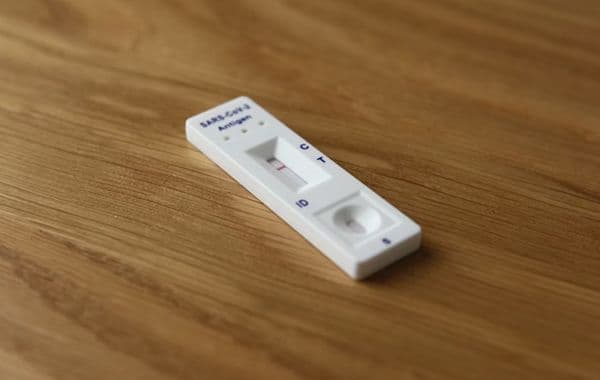
The COVID-19 pandemic highlighted and exacerbated health inequities between Māori and other New Zealanders. These inequities were predicted by early disease outcome modelling, demonstrated after the second outbreak, and inspired a robust equity-driven vaccination prioritisation strategy the Government was slow to adopt. Central Government’s failure to pro-actively focus on preventing inequity has been the subject of two High Court cases and an urgent Treaty of Waitangi hearing: the predicted inequity occurred and is now routinely reported at a national level in Crown health data.
Alongside the National Hauora Coalition, iNZight Analytics has produced a number of reports on the use of Crown data to improve COVID-19 outcomes for Māori.
Initial report commissioned by: National Hauora Coalition
Additional resourcing from: iNZight Analytics
The initial report from focused on using Crown data to highlight potential focuses of Crown action to improve COVID-19 outcomes for Māori. We put a Te Tiriti lens on the available data to also provide information on how policy amenable factors relate to COVID-19 outcomes, with the aim of identifying potential policy targets that could reduce future health inequities faced by Māori. The report begins with a demonstration of the inequity between Māori/non-Māori and the association of these inequities with area-based social deprivation as measured by the NZ Deprivation Index. However, the intent of was report is to highlight government policy targets, so we then examine whether household and individual factors are associated with good or poor outcomes for Māori specifically.
This report used data in the Stats NZ Integrated Data Infrastructure (IDI) to quantify and examine inequities with respect to four COVID-19 outcomes: testing positive, hospitalisations, deaths, and vaccination status. This involve dall the available data in the IDI for the entire duration of the pandemic in Aotearoa (as at October 2023) that can be linked at an individual level. This was the first time such a comprehensive analysis of COVID-19 inequity for Māori has been done in Aotearoa. This report is not available to the public.
A technical report of the methods used for this work was later published by iNZight Analytics: More than just living in a deprived area: an equity-focused analysis of policy amenable factors associated with Māori COVID-19 outcomes. This is available for download in the links section.

A tool enabling users to explore how the number and type of Māori electorates change with changes in both the Census population counts and Māori electoral roll enrolment.
The number of electorates in New Zealand is determined by a calculation based on two sources of information — the results from the most recent Census of Population and Dwellings and the proportion of individuals of Māori descent aged over 18 years who have chosen to be listed on the Māori electoral roll.
This tool enables users to explore how the number and type of electorates change with changes in both the Census population counts and the Māori electoral roll enrolment.
Consequently, this tool provides estimates of electorate numbers that are as accurate as possible, but the definitive answer is only possible with access to information that is not publicly available. However, it provides an effective tool to explore the sensitivity of the number and types of electorates to changes in population counts and electoral enrolment.
Funded by: iNZight Analytics
The Māori Electorate Explorer is currently being updated with more recent information.

Pacific peoples are often treated as a single group for the purpose of reporting on health outcomes in New Zealand, but this ignores the diversity between specific Pacific ethnic populations.
This report summarises work conducted using Statistics New Zealand’s (Stats NZ) Integrated Data Infrastructure (IDI) to better capture this diversity and enable more accurate reporting on cancer outcomes (all cancers and stomach cancer) among those who identify with “Level 2” Pacific ethnicities: Samoan, Cook Islands Māori, Tongan, Niuean, Tokelauan & Fijian.
This work was supported as part of a Health Research Council (HRC) Programme Grant 17/610 led by Professor Parry Guilford at the University of Otago.
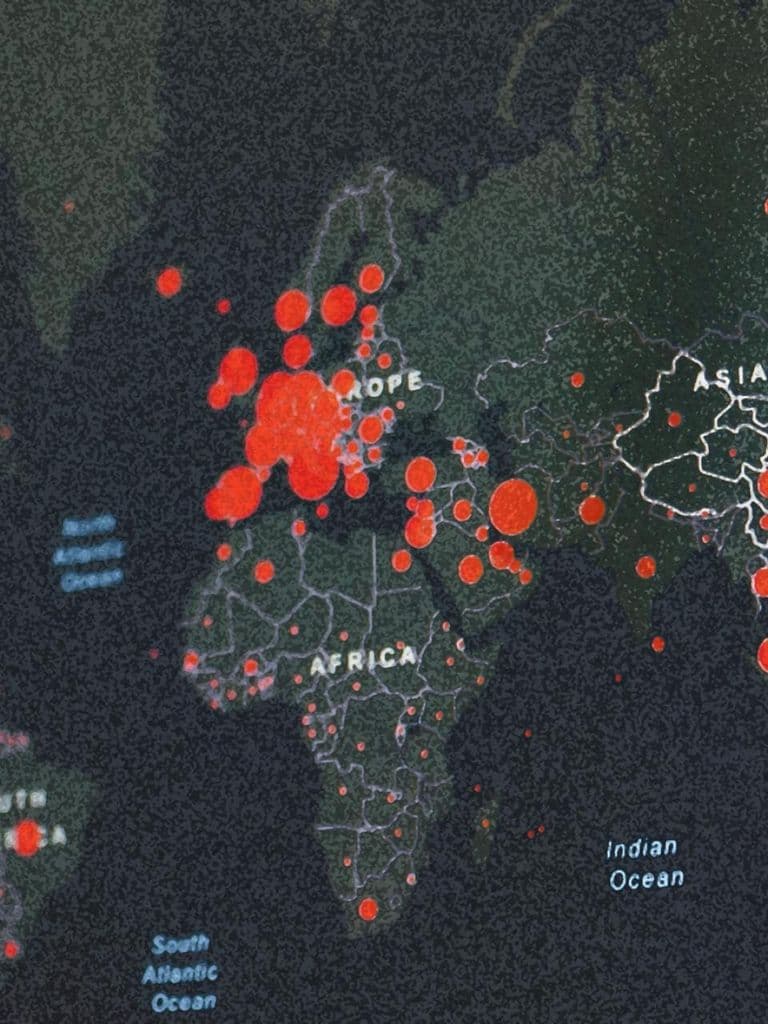
Managing director Andrew Sporle was part of the initial COVID-19 pandemic modelling team with Te Pūnaha Matatini with a particular focus on equity. He helped to create an early tool that looked at regional outcomes by age and ethnicity if the pandemic continued without public health interventions. The team won the 2020 Prime Minister's Science prize for their work.
Since then Andrew has been involved with further COVID-19 projects, including a project that aims create a population based contagion model for New Zealand (led by Dr Dion O'Neale).
Andrew has also been involved in ESR work exploring genetic subtypes, resulting in the first paper to identify on plane transmission of COVID, and a second workstream demonstrating that the most effective vaccine rollout strategy for Aotearoa was one that prioritised the needs of Māori and Pasifika.
Recently, Andrew has been involved in work around improving access to Māori data from the Ministry of Health.