
Mātau is an easy to learn data visualisation tool that enables rapid calculation and comparison of robust population statistics, without the need for additional software or specialist statistical skills.
No statistical calculation or coding are required to produce rich, detailed tables, graphs, and maps.

IDI Search is a web app that allows researchers to search for variables that are available in the IDI and, in some cases, metadata about these variables. The app uses data from IDI variables and Data Dictionaries shared with us by Stats NZ. The data are stored in a database which can then be searched using the web app.
IDI Search was developed by Te Rourou Tātaritanga , a research group funded by an MBIE Endevaour Grant (ref 62506 ENDRP).


This interactive tool visualises New Zealand's projected demographic changes from 2018 through 2043, providing insights into both total population and voting-age population trends across national and regional levels.
Some of the features include interactive population pyramids, to explore age and gender distributions; an interactive map, to compare demographic trends across regions; and electoral insights, to examine voting-age populations and new voter estimates.
iNZight is a free and accessible statistical visualisation software. Founded by Chris Wild of the University of Auckland, development of iNZight is now lead by Tom Elliott of iNZight Analytics.
The software was initially designed for New Zealand high schools, allowing students to quickly and easily explore data and understand basic statistical ideas using the companion program VIT. However, iNZight now extends to multivariable graphics, time series, and generalised linear modelling, including modelling of data from complex surveys.
iNZight is free. That means you can download and use it however you want, for whatever you want. There are absolutely no restrictions. You can download for yourself or redistribute it. You can even modify it if you are so inclined! However, it is important to note that iNZight comes with absolutely no warranty.

Calculating and comparing health or social statistics for populations can be tricky, time consuming and usually requires advanced statistical skills.Mātau is an easy to learn tool that enables rapid calculation and comparison of robust population statistics without additional software or specialist statistical skills. No statistical calculation or coding are required to produce tables, graphs and even maps.
Funded by: iNZight Analytics
It can be used for any outcome statistics in any geographical area or time period using either aggregate data (counts) or unit record file data. Comparisons can be made between population outcomes over time, between regions or by ethnicity, age or sex. Pull down menus and interactive graphics are used to producing statistically robust calculations and comparisons including confidence intervals. Multiple options for analysis can be selected from the menu if required but the default setting on menus is the standard approach allowing Mātau produces results in the form of tables, graphs and maps with all output exportable in multiple formats so they can be easily included in offline reports.
An early version of Mātau was used for estimation of regional ethnic- and age-specific COVID-19 outcomes near the beginning of the pandemic in early 2020, and presented to the New Zealand Government for policymaking. The Mātau app is currently being redeveloped using updated Ministry of Health data.

Pacific peoples are often treated as a single group for the purpose of reporting on health outcomes in New Zealand, but this ignores the diversity between specific Pacific ethnic populations.
This report summarises work conducted using Statistics New Zealand’s (Stats NZ) Integrated Data Infrastructure (IDI) to better capture this diversity and enable more accurate reporting on cancer outcomes (all cancers and stomach cancer) among those who identify with “Level 2” Pacific ethnicities: Samoan, Cook Islands Māori, Tongan, Niuean, Tokelauan & Fijian.
This work was supported as part of a Health Research Council (HRC) Programme Grant 17/610 led by Professor Parry Guilford at the University of Otago.

There is an expressed need of Māori providers and communities for high quality, localised information that can be used to inform and monitor interventions to improve key Maori health outcome measures. Te Hao Nui is a longitudinal study that will link together the data from Te Kupenga, the Integrated Data Infrastructure (IDI), and the Longitudinal Census Database to create the world’s largest and most comprehensive indigenous longitudinal study capable of following individual pathways forwards and backward in time.
Funded by: Health Research Council
Grant number: 18/849
The study entirely draws on previously collected administrative data, no new data are collected as part of this project.
Focusing on informing local interventions and policy, this project will transform national statistics into locally accessible information linked into service delivery planning and evaluation at the iwi, rohe as well as at the regional level.
Linking into existing iwi and regional Māori development plans, this project will produce information that will immediately inform the delivery of services and interventions to improve rangatahi wellbeing.
It will additionally create a permanent resource within the official statistics system that can be used for research, evaluation, and monitoring of rangatahi well-being on an on‐going basis.

Te Rourou Tātaritanga: Informatics for Social Services and Wellbeing aims to address New Zealand's critical need for better linking of data and access to datasets, leveraging administrative and other data resources to advance excellence in the use of social data.
Andrew Sporle is a co-leader on the project, alongside researchers from the University of Auckland and Victoria University of Wellington.
Funded by: Ministry of Business, Innovation and Employment Endeavour Fund
Grant number: 62506 ENDRP
Te Rourou Tātaritanga aims to improve data standards, support secure and ethical access to data, and promote Māori data sovereignty, while addressing privacy, legal, and security considerations surrounding the use of social data. By strengthening how social data is linked, accessed, and analysed, the programme will support more informed decision-making in the development of social policy.
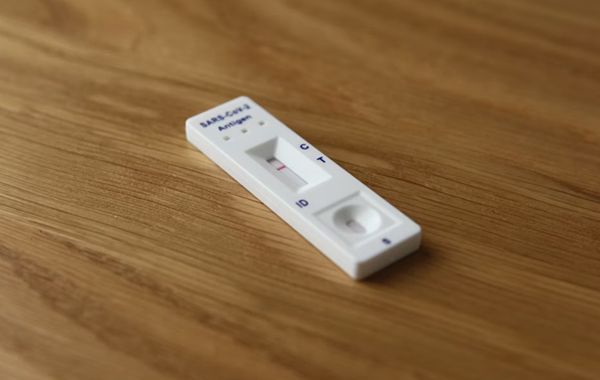
The COVID-19 pandemic highlighted and exacerbated health inequities between Māori and other New Zealanders. These inequities were predicted by early disease outcome modelling, demonstrated after the second outbreak, and inspired a robust equity-driven vaccination prioritisation strategy the Government was slow to adopt. Central Government’s failure to pro-actively focus on preventing inequity has been the subject of two High Court cases and an urgent Treaty of Waitangi hearing: the predicted inequity occurred and is now routinely reported at a national level in Crown health data.
Alongside the National Hauora Coalition, iNZight Analytics has produced a number of reports on the use of Crown data to improve COVID-19 outcomes for Māori.
Initial report commissioned by: National Hauora Coalition
Additional resourcing from: iNZight Analytics
The initial report from focused on using Crown data to highlight potential focuses of Crown action to improve COVID-19 outcomes for Māori. We put a Te Tiriti lens on the available data to also provide information on how policy amenable factors relate to COVID-19 outcomes, with the aim of identifying potential policy targets that could reduce future health inequities faced by Māori. The report begins with a demonstration of the inequity between Māori/non-Māori and the association of these inequities with area-based social deprivation as measured by the NZ Deprivation Index. However, the intent of was report is to highlight government policy targets, so we then examine whether household and individual factors are associated with good or poor outcomes for Māori specifically.
This report used data in the Stats NZ Integrated Data Infrastructure (IDI) to quantify and examine inequities with respect to four COVID-19 outcomes: testing positive, hospitalisations, deaths, and vaccination status. This involve dall the available data in the IDI for the entire duration of the pandemic in Aotearoa (as at October 2023) that can be linked at an individual level. This was the first time such a comprehensive analysis of COVID-19 inequity for Māori has been done in Aotearoa. This report is not available to the public.
A technical report of the methods used for this work was later published by iNZight Analytics: More than just living in a deprived area: an equity-focused analysis of policy amenable factors associated with Māori COVID-19 outcomes. This is available for download in the links section.

IDI Search is a web app that allows researchers to search for variables that are available in the IDI and, in some cases, metadata about these variables. The app uses data from IDI variables and Data Dictionaries shared with us by Stats NZ. The data are stored in a database which can then be searched using the web app.
Funded by: Ministry of Business, Innovation & Employment Endeavour Fund
Grant number: 62506 ENDRP
This project was initially funded by an MBIE Endeavour Fund grant, with further development carried out by iNZight Analytics. Ongoing resourcing from 2025 is provided by Stats NZ.

It’s a common aspiration for our children to do better in life than we do. This upward social mobility between one generation and the next benefits not only the families but also the country as a whole. Increasing levels of education, skills and income contribute to a more prosperous economy and a wealthier society. Being able to identify the things that support increased education, skills and income is the first step towards investing in actions that will increase the country’s wealth within a single lifetime.
Funded by: Ministry of Business, Innovation, and Employment
Contract number: ZANAL2501
This research uses New Zealand’s high-quality data resources to look at what things support upward social mobility and what things restrict that mobility. The quality of New Zealand’s data allows this research to look at the national picture as well as focus on specific populations such as Māori and rural communities. The results of this work will help guide investments in policies and programs that create pathways to better economic circumstances for New Zealanders and a more prosperous economy. This work will also support the development of an internationally important research industry based on New Zealand’s world leading data resources.
This project is funded from 2025 - 2028 by the Ministry of Business, Innovation, and Employment Smart Ideas grant. It is led by iNZight Managing Director Andrew Sporle and Senior Researcher Nicole Satherley, in collaboration with Barry Milne and Natalia Boven of the COMPASS Research Centre.

Using data from Statistics New Zealand’s Integrated Data Infrastructure (IDI), this research examines life outcomes for autistic Māori across key areas, and seeks to identify associated patterns of government service use and costs.
Hosted by: The University of Otago