
iNZight Analytics is involved in Michael Plank's Marsden Fund research project Robust modelling of inter and intra-ethnic variability in infectious disease outcomes. This project develops infectious disease models that incorporate socioeconomic and population-group differences in New Zealand to better understand and reduce health inequities, informing more equitable responses to future pandemics.
Funded by: Royal Society of New Zealand Te Apārangi
Grant number: 24-UOC-020
From the grant: Mathematical models are an essential tool for understanding and responding to infectious diseases and pandemics. However, models often do a poor job of capturing heterogeneities in epidemic dynamics between different parts of the population, such as different ethnicities. This severely limits their usefulness in understanding why different groups are differentially impacted by infectious diseases, and how to respond. In this project, we will develop new mathematical theory and design novel models that capture time-varying differences in transmission rates between and within different subpopulations. We will validate these models by benchmarking against New Zealand epidemiological data for measles and Covid-19.
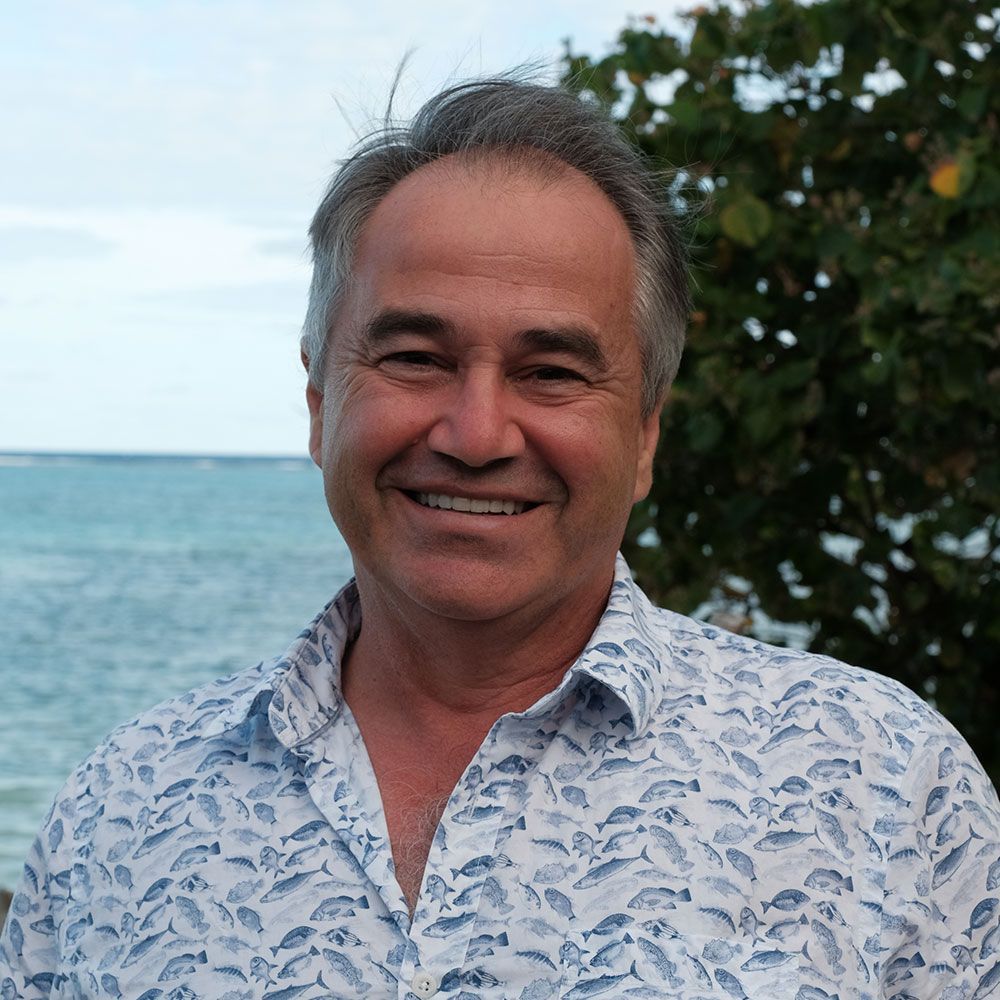


Managing director Andrew Sporle was part of the initial COVID-19 pandemic modelling team with Te Pūnaha Matatini with a particular focus on equity. He helped to create an early tool that looked at regional outcomes by age and ethnicity if the pandemic continued without public health interventions. The team won the 2020 Prime Minister's Science prize for their work.
Since then Andrew has been involved with further COVID-19 projects, including a project that aims create a population based contagion model for New Zealand (led by Dr Dion O'Neale).
Andrew has also been involved in ESR work exploring genetic subtypes, resulting in the first paper to identify on plane transmission of COVID, and a second workstream demonstrating that the most effective vaccine rollout strategy for Aotearoa was one that prioritised the needs of Māori and Pasifika.
Recently, Andrew has been involved in work around improving access to Māori data from the Ministry of Health.
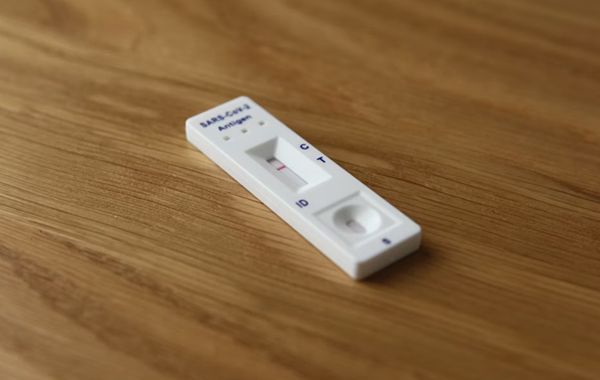
The COVID-19 pandemic highlighted and exacerbated health inequities between Māori and other New Zealanders. These inequities were predicted by early disease outcome modelling, demonstrated after the second outbreak, and inspired a robust equity-driven vaccination prioritisation strategy the Government was slow to adopt. Central Government’s failure to pro-actively focus on preventing inequity has been the subject of two High Court cases and an urgent Treaty of Waitangi hearing: the predicted inequity occurred and is now routinely reported at a national level in Crown health data.
Alongside the National Hauora Coalition, iNZight Analytics has produced a number of reports on the use of Crown data to improve COVID-19 outcomes for Māori.
Initial report commissioned by: National Hauora Coalition
Additional resourcing from: iNZight Analytics
The initial report from focused on using Crown data to highlight potential focuses of Crown action to improve COVID-19 outcomes for Māori. We put a Te Tiriti lens on the available data to also provide information on how policy amenable factors relate to COVID-19 outcomes, with the aim of identifying potential policy targets that could reduce future health inequities faced by Māori. The report begins with a demonstration of the inequity between Māori/non-Māori and the association of these inequities with area-based social deprivation as measured by the NZ Deprivation Index. However, the intent of was report is to highlight government policy targets, so we then examine whether household and individual factors are associated with good or poor outcomes for Māori specifically.
This report used data in the Stats NZ Integrated Data Infrastructure (IDI) to quantify and examine inequities with respect to four COVID-19 outcomes: testing positive, hospitalisations, deaths, and vaccination status. This involve dall the available data in the IDI for the entire duration of the pandemic in Aotearoa (as at October 2023) that can be linked at an individual level. This was the first time such a comprehensive analysis of COVID-19 inequity for Māori has been done in Aotearoa. This report is not available to the public.
A technical report of the methods used for this work was later published by iNZight Analytics: More than just living in a deprived area: an equity-focused analysis of policy amenable factors associated with Māori COVID-19 outcomes. This is available for download in the links section.

iNZight Analytics' Andrew Sporle is a co-principal investigator on the Te Niwha project Improving models for pandemic preparedness and response: modelling differences in infectious disease dynamics and impact by ethnicity, alongside Dr. Samik Datta and Prof. Michael Plank. iNZight team members Nicole Satherley, Tori Diamond, and Ruby Pankhurst are also key personnel on the project.
Funded by: Te Niwha Infectious Disease Research Platform
Hosted by: University of Canterbury
From the grant: The Covid-19 pandemic demonstrated the value of mathematical models for informing policy decisions and the public health response to infectious disease threats. However, a major flaw in many models is that they either overlook or poorly characterise differences in disease burden between population subgroups. In New Zealand, Māori and Pacific populations have disproportionately worse health outcomes from infectious diseases and pandemics, but current cutting-edge models cannot account for the disparity in infectious disease vulnerability in these populations.
Our project will create new modelling methods that account for the diversity of vulnerability within and between populations. We have two research aims:
Aim 1. Develop new mathematical models that can capture differential dynamics of disease transmission within and between population subgroups, such as ethnicity groups or deprivation index. This will enhance understanding of epidemic dynamics by using stratified models to simulate the behaviour of future epidemic events.
Aim 2. Apply and validate these models using recent case studies on differences between ethnicity groups in Aotearoa New Zealand. We will parameterise and validate our models using anonymised age- and ethnicity-specific data, as well as linked health, Census and administrative data from Stats NZ, the Ministry of Health and Te Whatu Ora.
Got a project idea? Let's work together
Get in touch